

Some places are not far away in kilometres, but they feel like a small change of world.
Varese Ligure is one of them.
From Levanto, it takes less than an hour by car to reach this quiet village in the Alta Val di Vara, surrounded by hills, woods, rivers and a very different rhythm from the coast. The sea disappears behind you, the road begins to climb, the air changes, and little by little Liguria becomes more rural, greener, softer and more silent.
Varese Ligure is known as the Borgo Rotondo, the round village, because of the unusual elliptical shape of its historic centre. It is also part of I Borghi più belli d’Italia, has been awarded the Bandiera Arancione by the Touring Club Italiano, and sits in the heart of the so-called Organic Valley, one of the areas of Liguria most closely associated with organic farming, environmental awareness and a slower way of living.
It is a lovely day trip from Levanto if you want to discover another side of Liguria: less dramatic than the Cinque Terre, less famous than the coast, but full of history, craft, local food and quiet charm.
Why visit Varese Ligure?
Many travellers come to Levanto to visit the Cinque Terre. That makes perfect sense, of course. The villages, the sea, the trails and the train line are all very close.
But if you stay a little longer, or if you already know the coast and would like to see something different, Varese Ligure is a beautiful reminder that Liguria is not only sea.
It is also inland valleys, stone bridges, chestnut woods, small markets, old artisan workshops, mountain roads, organic farms and villages where life still seems to follow a slower pace.
Varese Ligure is especially worth visiting if you enjoy:
- Small historic villages;
- Local architecture and medieval town planning;
- Artisan shops and traditional crafts;
- Organic food and rural landscapes;
- Quiet places outside the busiest tourist routes;
- Scenic drives through the Ligurian inland;
- A slower day away from the coast.
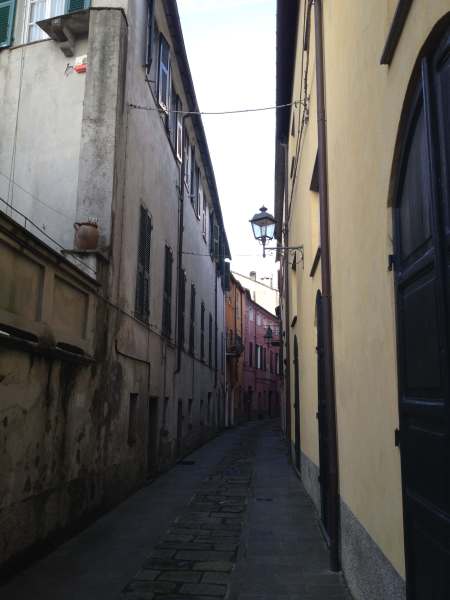
It is not a place to rush. It is a place for wandering, looking up at façades, stepping under arcades, entering a shop, stopping for lunch and letting the village reveal itself slowly.
How to get to Varese Ligure from Levanto
The easiest way to visit Varese Ligure from Levanto is by car.
The drive takes around 40 minutes, depending on traffic and the route you choose. The distance is about 36 kilometres by road, and the journey takes you inland through the Val di Vara, with a very different landscape from the coastal road.
Public transport is possible, but less practical for a relaxed day trip, because it usually involves bus connections and longer travel times. If you are staying at the Oasi Eco Boutique Hotel and have a car, this is one of the inland excursions that makes most sense to organise independently.
A simple plan could be:
- Leave Levanto after breakfast;
- Reach Varese Ligure mid-morning;
- Walk through the Borgo Rotondo and the old village;
- Visit the castle area, the bridge and the artisan shops;
- Stop for lunch in the village or nearby;
- Return to Levanto in the afternoon, or continue exploring the Val di Vara.
If you are travelling in winter or on a quiet weekday, check opening hours before leaving, especially for shops, restaurants and workshops.
The Borgo Rotondo
The heart of Varese Ligure is the Borgo Rotondo.
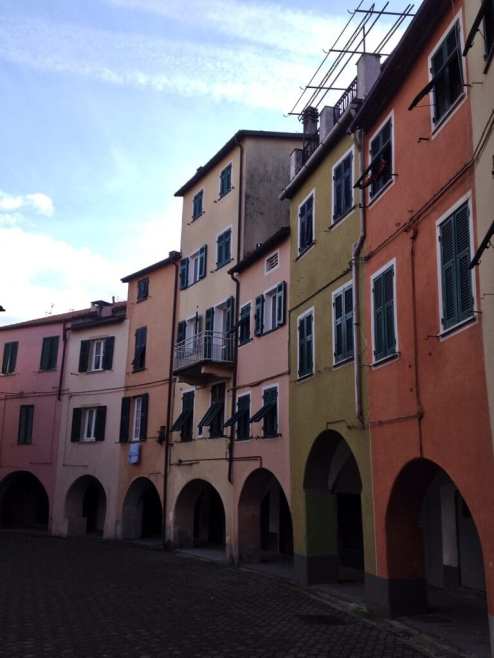
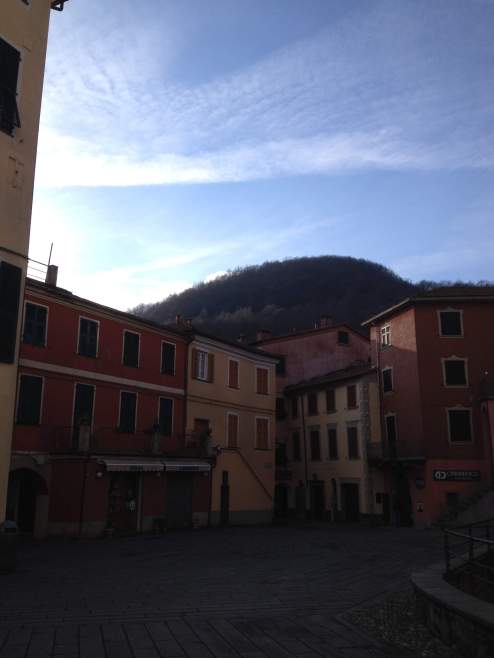
It is not a nickname invented for tourism. The village really has an unusual circular, or more precisely elliptical, structure. The houses are arranged around an internal space, with façades, arcades and narrow passages that still make the medieval plan easy to read.
This layout dates back to the urban project developed by the Fieschi family between the late 13th and early 14th centuries. The idea was not only aesthetic. The village was designed with a clear structure, connected to defence, trade and the control of routes between the Ligurian coast and the Po Valley.
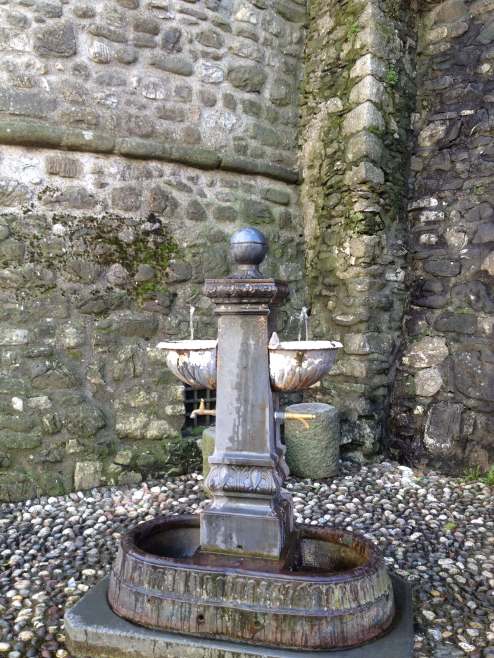
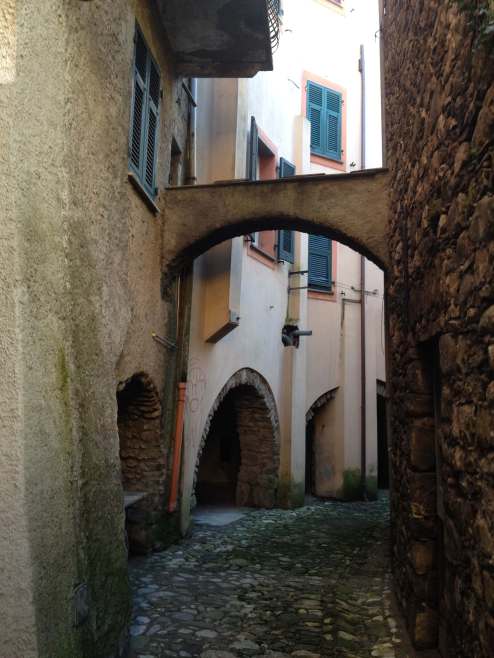
Today, what remains is much gentler: coloured façades, stone paving, arches, quiet corners, small shops and a sense of order that feels almost surprising in a medieval village.
Walking through the Borgo Rotondo, you notice how the houses seem to protect the internal space. From outside, the village can feel compact and discreet. Once inside, it opens into a small world of stone, colour and proportion.
A little history
Varese Ligure has ancient origins and owes much of its importance to its position.
The village lies in the upper Val di Vara, close to routes that historically connected Genoa, Parma and La Spezia. This made it a natural place for trade, passage, markets and control of the territory.
The Fieschi family played a central role in shaping the medieval village. Later, Varese Ligure passed through different political and noble powers, before becoming part of the Republic of Genoa and then following the wider changes brought by the Napoleonic period.
You do not need to know every date to enjoy the visit. The history is visible enough in the village itself: in the structure of the Borgo Rotondo, in the castle, in the portals, in the narrow streets, in the stone bridge, and in the way the village sits between river, hills and old roads.
What to see in Varese Ligure
The Fieschi Castle
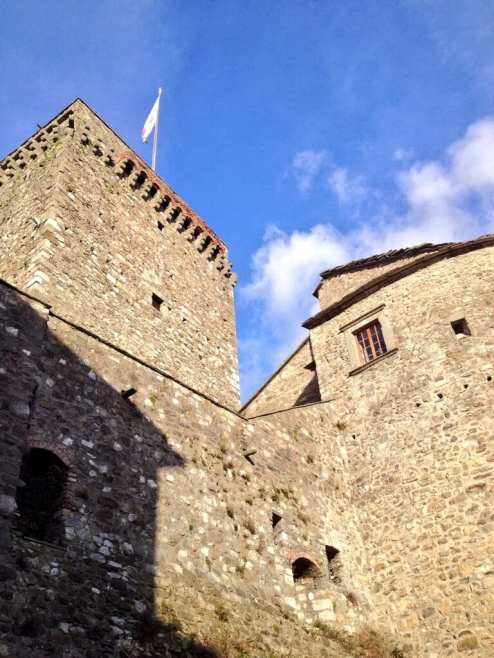
The Fieschi Castle is one of the most visible landmarks of Varese Ligure.
It stands close to the Borgo Rotondo and still gives a strong impression of the medieval importance of the village. Its towers and solid presence remind you that this was not only a pretty settlement, but also a place of power, control and defence.
Even if you only see it from outside, it helps give shape to the visit. Start here, or keep it as a point of reference while you wander through the village.
Palazzo Ferrari and the memory of Luigia Pallavicini
If you love literature and history, Varese Ligure has a small and elegant curiosity.
Palazzo Ferrari is connected to Luigia Ferrari, later Luigia Pallavicini, to whom Ugo Foscolo dedicated the famous ode A Luigia Pallavicini caduta da cavallo. The wedding between Domenico Pallavicini and Luigia Ferrari was celebrated in the private chapel of the palace.
It is one of those details I love in small villages: you turn a corner, read a plaque or look at a building, and suddenly a quiet inland place is connected to Italian literature, noble families and a much wider story.
The Ponte di Grecino
The Ponte di Grecino is another lovely stop during a walk in Varese Ligure.
It is an old stone bridge over the River Vara and offers a different view of the village, with water, houses and hills around you. It is also a good reminder that Varese Ligure developed around movement: rivers, roads, markets, valleys and connections.
Take a few minutes here. It is a simple place, but often those are the ones that stay with you.
The old streets and arcades
The best thing to do in Varese Ligure is still the simplest one: walk.
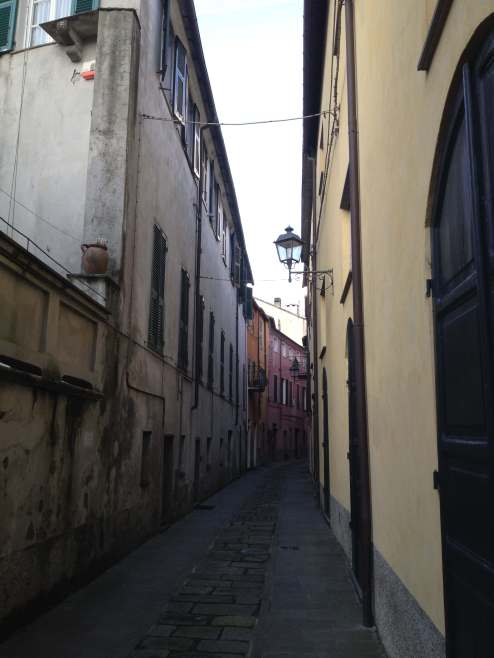
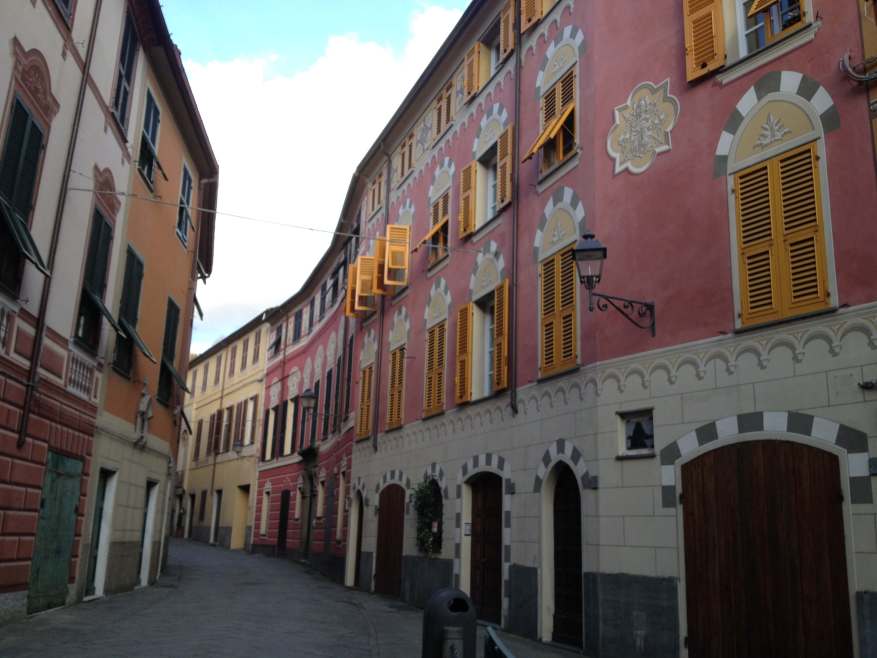
Look for the arcades, the decorated façades, the stone portals, the side alleys and the quiet corners around the Borgo Rotondo. If you visit out of season, you may find the village almost silent, with only the sound of your footsteps on the stone and the smell of wood smoke in the air.
That was exactly how I first remember it: calm, slightly suspended, and almost unchanged by time.
Varese Ligure and the Organic Valley
Varese Ligure is often associated with the Organic Valley, the Val di Vara area known for organic farming and environmental choices.
This is not only a label. The valley has long worked on agriculture, local production and sustainability, and Varese Ligure became one of the symbolic places of this approach. It was also recognised for its environmental policies and for its attention to renewable energy and more responsible land management.
For guests staying at the Oasi Eco Boutique Hotel, this part of the story feels especially interesting. Sustainability is often discussed as if it were a new idea, but in places like the Val di Vara you can see how it can be linked to agriculture, community, landscape and daily choices.
A visit to Varese Ligure is therefore also a way to discover a more rural and conscious side of Liguria.
Marenco 1947
One of the stops I still suggest is Marenco 1947, in Piazza Vittorio Emanuele II.
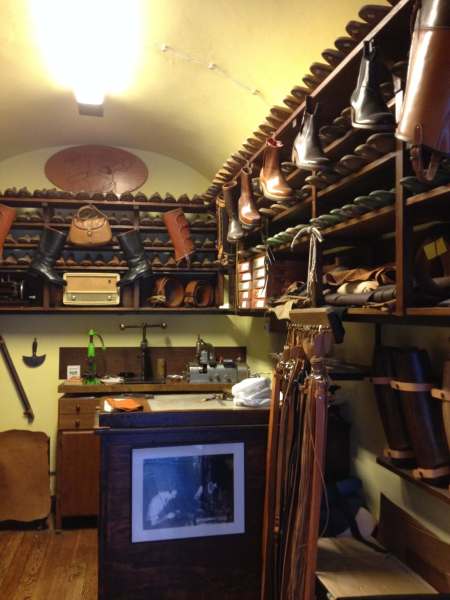
When I first wrote about Varese Ligure years ago, I described it as Calzoleria Marenco, a paradise for those who love shoes and handmade leather goods. Time has passed, and some things have changed. The custom-made shoe production ended in 2003, after the death of the founder Angelo Marenco, but the bottega continues its story through Marenco 1947.
Today it offers a limited and exclusive production, designed, made and sold only in Varese Ligure. It is still one of those places where you feel that a shop is not just a shop, but a small piece of local memory.
Even if you do not plan to buy anything, it is worth stopping in front of the window or stepping inside if it is open. Small artisan places like this help you understand the character of a village better than many guidebooks.
Croxetti, or corzetti: the stamped pasta of Varese Ligure
Another reason to love Varese Ligure is food.
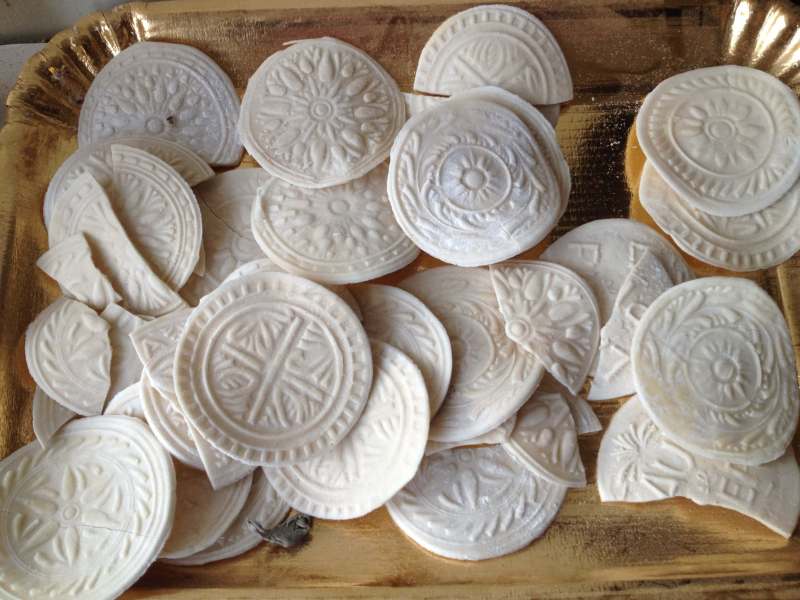
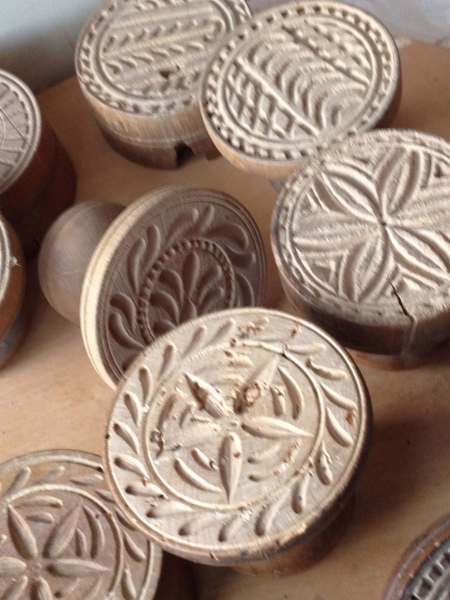
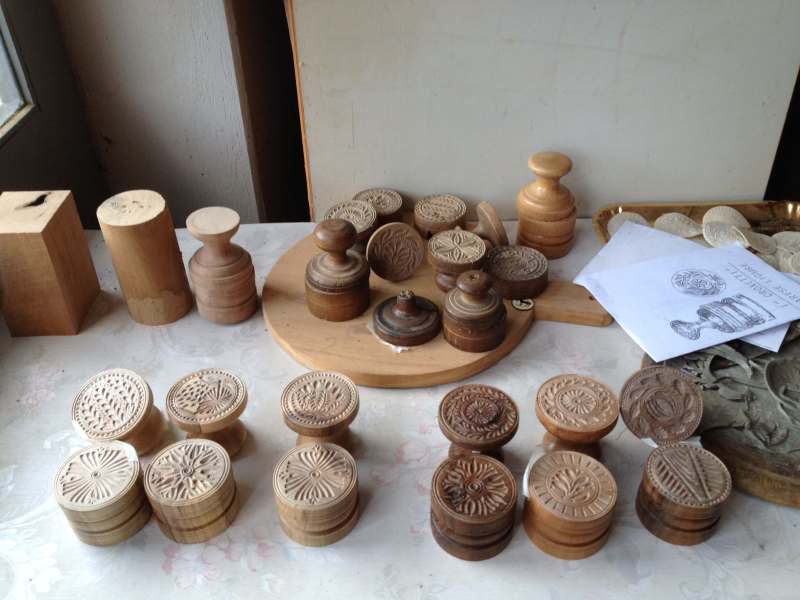
One of the most typical local traditions is croxetti, also known in Italian as corzetti: small round discs of pasta stamped with wooden moulds. The designs are not only decorative. They help the sauce cling better to the pasta, and they carry a long tradition of family symbols, noble coats of arms and special occasions.
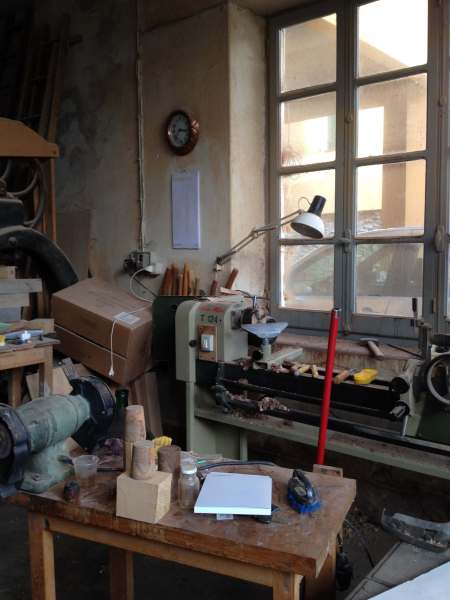
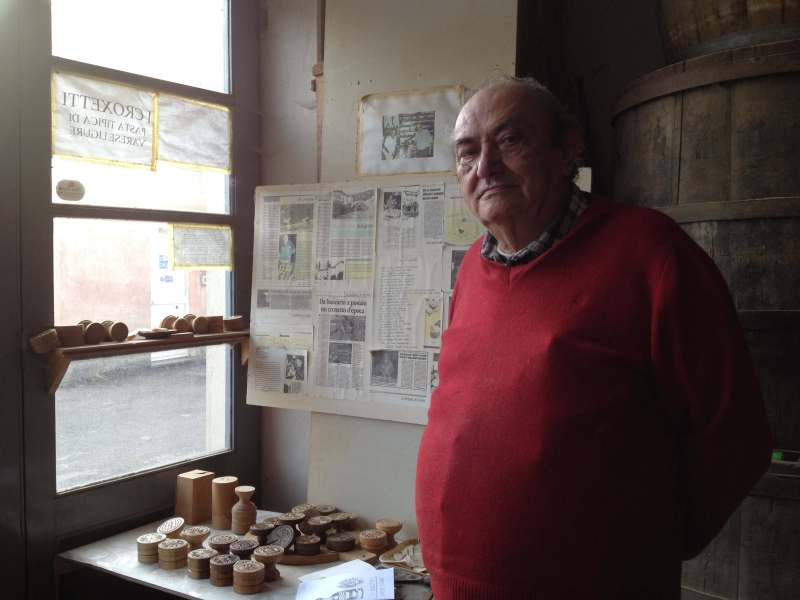
In the past, many families had their own moulds. Over time, this tradition risked becoming forgotten, until artisans such as Pietro Picetti helped bring it back to life in Varese Ligure. His work with hand-carved wooden moulds became part of the story of the village, and the craft has continued through his family.
Croxetti are usually served with pesto, meat sauce or a white sauce made with pine nuts, garlic and marjoram. The white pine nut sauce is one of the most delicate versions, and it suits the quiet character of the inland perfectly.
If you find croxetti on a menu, order them.
If you find a wooden stamp to take home, consider it too. It is one of those souvenirs that asks you to do something with it, not just place it on a shelf.
What to eat in Varese Ligure
Varese Ligure and the Val di Vara are good places to look for local, simple and seasonal food.
Depending on the restaurant and the season, you may find:
- Croxetti or corzetti with pesto, meat sauce or pine nut sauce;
- Fresh pasta and ravioli;
- Organic meat from the valley;
- Mushrooms and chestnuts in autumn;
- Local cheeses;
- Vegetable pies and savoury Ligurian dishes;
- Homemade desserts.
This is a good place for a slow lunch, especially if you are visiting from Levanto and do not need to rush back to the coast.
I would recommend booking ahead at weekends or during holiday periods, and checking opening days in winter or low season.
How much time do you need?
For a simple visit to the village, allow at least two or three hours.
For a more relaxed day trip from Levanto, I would plan half a day or a full day, especially if you want to have lunch, visit artisan shops and maybe continue through the Val di Vara.
A good rhythm could be:
- Morning departure from Levanto;
- Walk through the Borgo Rotondo;
- Visit the castle area, Palazzo Ferrari and Ponte di Grecino;
- Stop in artisan shops;
- Lunch in Varese Ligure;
- Slow return through the valley.
If you enjoy photography, autumn light and quiet villages, Varese Ligure is particularly beautiful outside the busiest periods.
When to visit Varese Ligure
Varese Ligure can be visited all year round, but each season gives it a different atmosphere.
Spring is green, fresh and good for walking.
Summer can be a pleasant inland break from the heat of the coast.
Autumn is perhaps the most atmospheric season, with chestnuts, mushrooms, softer light and the smell of wood smoke returning to the village.
Winter is quiet, sometimes very quiet, but also charming if you enjoy silence, stone streets and places that do not perform too much for visitors.
For guests staying at the Oasi in Levanto outside the main season, Varese Ligure is a lovely idea for a day when you want to see another side of Liguria without going too far.
A few practical tips
Wear comfortable shoes, because the village is small but paved with stone in several areas.
Bring a light jacket, especially outside summer. The inland climate can feel different from Levanto.
Check restaurant and shop opening hours before leaving, especially in low season.
Travel by car if possible, because public transport connections from Levanto are not the most convenient for a flexible day trip.
Do not expect a busy tourist village. Varese Ligure is quiet, and that is part of its beauty.
Leave a little time for wandering without a fixed plan.
Staying in Levanto and discovering the inland
One of the pleasures of staying in Levanto is that you can easily combine very different landscapes.
One day you can take the train to the Cinque Terre. Another day you can walk by the sea, cycle towards Bonassola and Framura, or explore the inland valleys by car.
Varese Ligure is perfect for this kind of travel. It gives you a wider idea of Liguria: not only cliffs and beaches, but also river valleys, medieval villages, organic farming, old crafts and food traditions that belong to the mountains as much as to the coast.
After a day in the Borgo Rotondo, returning to Levanto for an evening by the sea feels even better.
FAQ
Where is Varese Ligure?
Varese Ligure is a village in the upper Val di Vara, in the province of La Spezia, Liguria. It is inland from the coast and surrounded by hills, woods and rural landscapes.
How far is Varese Ligure from Levanto?
Varese Ligure is about 36 kilometres by road from Levanto. The drive usually takes around 40 minutes, depending on traffic and the route.
Is Varese Ligure worth visiting from Levanto?
Yes. Varese Ligure is a lovely day trip from Levanto if you want to discover the inland side of Liguria, with a medieval village, artisan shops, local food and a quieter atmosphere.
Why is Varese Ligure called Borgo Rotondo?
Varese Ligure is called Borgo Rotondo because of the unusual elliptical shape of its historic centre, designed in the Middle Ages under the Fieschi family.
Is Varese Ligure one of the Borghi più belli d’Italia?
Yes. Varese Ligure is part of I Borghi più belli d’Italia and has also been awarded the Bandiera Arancione by the Touring Club Italiano.
What is the Organic Valley?
The Organic Valley refers to the Val di Vara, an inland area of Liguria known for organic farming, environmental awareness and rural landscapes. Varese Ligure is one of its symbolic villages.
What should I see in Varese Ligure?
The main things to see are the Borgo Rotondo, the Fieschi Castle, Palazzo Ferrari, the Ponte di Grecino, the old streets, the arcades and the artisan shops.
What are croxetti?
Croxetti, or corzetti, are small round discs of Ligurian pasta stamped with decorated wooden moulds. They are typical of the area and are often served with pesto, meat sauce or pine nut sauce.
Can I reach Varese Ligure by public transport from Levanto?
It is possible, but not very convenient for a relaxed day trip, because it usually requires bus connections and longer travel times. By car, the visit is much easier to organise.
How long should I spend in Varese Ligure?
You can visit the village in two or three hours, but a half-day or full-day trip is more enjoyable if you want to have lunch, visit artisan shops and explore the Val di Vara at a slower pace.

